Select Page

Category: Burglary

URN Registration: How to Get Police Response for Your Commercial Intruder Alarm System

URN Registration: How to Get Police Response for Your Commercial Intruder Alarm System

Without URN registration, your commercial intruder alarm won’t qualify for police response. You’ve invested in security, but without this certification, police response depends on resource availability and priorities rather than your system being response-eligible. Here’s exactly what you need to secure URN status and maintain eligibility for police response.

Your URN registration requires your system to meet strict NPCC Security Systems Policy standards. Your alarm must comply with BS EN 50131 and PD 6662 British Standards, be installed by NSI or SSAIB-certified providers and connect to a BS EN 50518-certified monitoring centre with proper alarm confirmation methods. Together, this reduces false alarms to the bare minimum. Otherwise, too many false alarms could revoke your URN status and remove police response eligibility entirely.

That’s exactly what we deliver – systems that meet every standard from day one, with ongoing support that keeps your URN status secure and your police response eligibility active.

The Big Picture

  • URN registration is mandatory for police response eligibility to commercial intruder alarms. Without it, police response isn’t guaranteed and depends on resource availability – even with the most advanced system.
  • Use only NSI or SSAIB-certified installers who guarantee compliance with BS EN 50131, PD 6662 and NPCC Security Systems Policy requirements.
  • Install systems meeting Grade 2 or 3 standards with dual-path signalling and connect to a BS EN 50518-certified monitoring centre.
  • Implement alarm confirmation methods compliant with BS 8243 to minimise false alarms that could result in URN status withdrawal.
  • Conduct proper site surveys to determine appropriate system grade and ensure all user responsibilities per BS 8473 are followed.

What URN Registration Means and Why It Matters for Your Business

Imagine this: Your alarm activates at 2am. Your monitoring station verifies it’s genuine. But without URN registration, police won’t respond based on your system’s eligibility – they’ll assess based on available resources and priorities. Your premises could be vulnerable whilst you arrange a response.

That’s the reality for businesses with non-compliant systems.

A Unique Reference Number (URN) transforms your commercial intruder alarm from a basic security measure into a system that qualifies for immediate police response during a genuine break-in, subject to operational priorities and resources.

Without URN registration, police response to your alarm activations isn’t prioritised and depends heavily on available resources and competing demands.

The URN registration process validates that your system meets rigorous standards that insurers recognise and often require. Alarm reliability becomes essential for maintaining URN status. Excessive false alarms result in URN registration withdrawal, eliminating police response eligibility entirely until rectified.

Working with NSI/SSAIB-certified installers means your system is designed, installed and connected correctly from the start – meeting every NPCC requirement that keeps your URN active and police response eligibility available.

Meeting the NPCC Security Systems Policy Requirements

The National Police Chiefs’ Council (NPCC) Security Systems Policy establishes non-negotiable criteria that determine whether your intruder alarm qualifies for police response.

Your system must demonstrate monitoring compliance through specific technical and operational standards to earn URN status. No compliance means no URN – and no police response eligibility.

The NPCC requires these essential components for police response eligibility:

  • Accredited installer: NSI or SSAIB certification proving competent design and installation
  • Compliant system design: PD 6662 standards with appropriate Grade 2 or 3 classification
  • Certified monitoring centre: BS EN 50518-accredited ARC with 24/7 staffing
  • Alarm confirmation: BS 8243 sequential confirmation reducing false activations
  • Controlled false alarm rate: Maximum permitted activations before URN withdrawal

System integration between detection, signalling and monitoring components must meet BS EN 50136 transmission standards.

Your installer should provide documented evidence of compliance across all elements before commissioning.

Important: The NPCC policy states that police response “will normally be immediate but is ultimately determined by the nature of demand, priorities and resources which exist at the time a request for police response is received and, therefore, cannot be guaranteed.”

Essential British Standards for URN-Eligible Intruder Alarm Systems

Whilst NPCC policy sets the framework for police response eligibility, specific British Standards define the technical requirements your intruder alarm system must meet to achieve URN status.

Core Standards for URN Eligibility

Your system must comply with BS EN 50131 for fundamental system performance and PD 6662 for the UK certification scheme.

BS EN 50131 and PD 6662 compliance form the technical foundation for achieving police response eligibility through URN certification.

These standards guarantee proper grading, detector sensitivity and installation guidelines that insurers and police recognise.

BS 8243 addresses alarm confirmation methods – sequential activation, audio verification or visual confirmation – which dramatically reduces false alarms and protects your URN status.

User Responsibilities Matter

BS 8473 outlines your obligations as the system user. Proper operation prevents chargeable false callouts that could jeopardise police response eligibility.

Ask your NSI/SSAIB-certified installer to specify exactly which standards your system meets on the commissioning certificate.

Choosing the Right System and Monitoring Station

Before selecting monitoring pathways, you’ll need to establish the appropriate system Grade based on your insurer requirements and business risk profile.

Your system grade determines monitoring architecture requirements and URN eligibility under the NPCC Security Systems Policy.

Grade 2 systems suit standard commercial premises with basic security needs, whilst Grade 3 addresses higher-risk environments requiring enhanced detection and signalling resilience.

We conduct thorough site surveys to determine the appropriate grade for your premises and specify monitoring architecture that matches your operational requirements.

Your choice directly impacts:

  • Dual-path signalling requirements – Grade 3 typically mandates IP primary with cellular backup
  • Detection coverage levels – perimeter, area and spot protection specifications
  • Confirmation methods – audio verification, sequential activation or visual confirmation
  • ARC processing standards – BS EN 50518 for ARC certification for alarm handling procedures
  • Insurance premium calculations – higher grades often secure better rates

Match your monitoring architecture to operational requirements, not budget constraints.

Working With NSI/SSAIB-Certified Providers to Secure Your URN

Since URN registration determines whether police can respond to your intruder alarms based on eligibility rather than just resource availability, you’ll need an NSI or SSAIB-certified provider who understands the NPCC Security Systems Policy requirements inside out.

As a fully accredited provider, we deliver exactly this – ensuring your system meets PD 6662 standards and maintains police response eligibility.

What Certified Installers Deliver

These accredited professionals ensure your system meets PD 6662 standards and includes proper alarm verification methods like BS 8243 sequential confirmation.

They’ll specify the correct Grade (typically 2 or 3), design dual-path signalling where required and connect you to a BS EN 50518-certified ARC.

Your Provider Must Provide Evidence of:

  • Current NSI/SSAIB certification covering intruder systems
  • ARC partnership with documented BS EN 50518 accreditation
  • Signal transmission specification meeting BS EN 50136
  • Commissioning certificates declaring PD 6662 compliance
  • User training protocols aligned with BS 8473

Ask potential providers to demonstrate their URN approval track record and current false alarm rates.

Before You Go

You’ve invested in security to protect your business, employees and assets. Don’t let technical gaps compromise that protection.

As accredited installers, we ensure your system meets every NPCC requirement, maintains PD 6662 compliance and connects to certified monitoring that prevents false alarms. More importantly, we keep your URN status active so police response eligibility is maintained when genuine threats emerge.

Your URN registration isn’t just paperwork. It’s what ensures police response eligibility rather than leaving it entirely to chance based on available resources.

Ready to secure your URN status? Contact us to see exactly how we’ll get you registered and keep you protected.

Celebrity Home Invasions Are on the Rise: Could Your High-Value Property Be Next?

Celebrity Home Invasions Are on the Rise: Could Your High-Value Property Be Next?

A celebrity home invasion might sound like something from a streaming thriller – but it’s happening in real homes, to real people, across the UK. For high-net-worth individuals, it’s an increasing and very real threat.

In February 2025, four masked intruders stormed the Essex home of Michelle Keegan and Mark Wright. The couple were at home. They locked themselves in the bedroom as burglars searched the property. The intruders fled after hearing shouting – but the shock lingers long after the crime.

It’s the kind of moment no homeowner wants to experience. And it proves that even a secured, high-profile home isn’t immune.

What the Headlines Are Telling Us

Footballers, actors and public figures are increasingly falling victim to organised criminal gangs. Often, they’re away. Often, the home already has security. And still, the breaches happen.

From Jack Grealish’s £1 million jewellery theft to Tamara Ecclestone’s record £25 million burglary, celebrity home invasions are making headlines at an alarming rate. Sophisticated criminals are studying, planning and executing targeted break-ins with chilling precision.

In Wales, an intruder breached the castle walls of I’m a Celebrity… Get Me Out of Here!’s filming location, Gwrych Castle while the show was actively being filmed with celebrities in residence. Despite strong visibility and security, the trespasser reached the castle walls before being intercepted. It shows how confidence in basic systems can lead to complacency, even at high-profile locations under media spotlight.

It’s Not Always Celebs on the Receiving End

And in East Sussex, a former actor broke into a family home in Peasmarsh, tied up a 14-year-old boy and stole valuables. This time, the home wasn’t famous – but it was clearly seen as an easy target. The result was trauma for a young child and a clear reminder: any perceived wealth can put a home on the radar.

The common thread? Criminals are planning. They’re adapting. And they’re not just targeting the famous. They’re targeting homes that look valuable, visible and vulnerable. This isn’t about celebrity. It’s about visibility, vulnerability and value. If your home ticks any of those boxes, it could be on someone’s list.

What Effective Security Really Looks Like

If you’re living in a high-value property, assume it’s a target – because sophisticated criminals may do.

A good security system isn’t just about what you have installed. It’s about how all the components work together, in real-time, to keep you safe.

Let’s break it down:

  • Layered: No single solution is enough. You need protection at every level: physical, digital, behavioural and procedural.
  • Maintained: That shiny smart system from five years ago? It’s only effective if it’s been serviced, tested, updated – and all of that documented.
  • Comprehensive: Good security doesn’t stop at the front door. It includes gates, upstairs windows, garages, outbuildings – even the cybersecurity of your smart devices.
  • Professionally Monitored: Real-time human response matters. Whether through a 24/7 ARC or private patrol, someone must act when systems are triggered.

Anything less provides a false sense of security.

Why Layered Security Matters

Modern criminals don’t rely on luck. They use tactics. They test weak spots. That’s why your protection needs to be layered:

  • Physical Barriers: Reinforced doors, windows, gates and fences delay access and deter casual threats.
  • Smart Surveillance: AI-powered CCTV, motion sensors and smart doorbells provide real-time alerts.
  • Controlled Access: Keyless entry, intercoms and access logs help you manage who comes and goes.
  • Panic Room: For some homes, a discreet, secure space could buy vital minutes during a worst-case scenario.
  • Smoke Screen Protection: Rapid-deployment fog systems fill the area in seconds, blocking visibility and forcing intruders to flee.
  • Professional Response: On-site teams or remote responders reduce the time between alert and action.

Don’t Rely on Tech Alone

Smart devices are only as good as the network they operate in. If you’re not regularly updating firmware, testing integrations or reviewing alerts, you’re creating the illusion of safety – not the reality.

Even the most advanced systems fail when neglected. Poor passwords, untested sensors and forgotten software updates are exactly what criminals count on.

Routine vulnerability assessments aren’t a luxury. They’re your early warning system – catching weaknesses before someone else does.

Build a Security Culture

Great security systems are only part of the solution. You also need secure behaviour:

  • Don’t post holidays or location updates on social media until you return home
  • Train family and staff on what to do during an alarm
  • Update access codes regularly and track who has them
  • Review procedures after any staffing or household changes

Security isn’t just a system. It’s a mindset. Is your family prepared?

Align with Insurance Requirements

Premium home insurance providers expect premium protection. If you want to qualify for extensive cover – and ensure any claim is paid out – your security needs to have:

  • Professionally installed AND MAINTAINED alarm and CCTV systems
  • Regular maintenance logs
  • Continuous 24/7 monitoring by an approved provider

And in some cases:

  • Panic rooms or safe zones

Insurers will check whether you’ve held up your end of the deal. If you haven’t, your claim could be at risk and you could lose your payout.

What to Do Now: Key Takeaways

  • High-value homes – celebrity or not – are prime targets
  • Modern criminals exploit both tech and behavioural lapses
  • No single system is enough; layered defence is vital
  • Maintenance, monitoring and mindset all matter
  • Your insurer expects proof – not promises

Final Word: Don’t Wait Until It’s Too Late

Celebrity home invasions aren’t just headline stories. They’re warnings. And while the homes might be famous, the risks aren’t limited to celebrities.

If you’re living in a high-value property, assume it’s a target -because sophisticated criminals already do. Don’t wait until your family feels unsafe or your peace of mind is shattered.

A layered, well-maintained, and professionally supported security setup is no longer optional – it’s essential.

Book a professional security review today.
Because when criminals strike, you won’t get a second chance.

Commercial Intruder Alarm Servicing in the UK

Commercial Intruder Alarm Servicing in the UK


Your commercial intruder alarm system needs professional servicing to meet UK regulations BS EN 50131 and BS 4737. You’ll need systematic checks of PIR sensors, door contacts, and control panels, along with regular testing of communication paths and battery health. Working with accredited security providers guarantees reliable maintenance and can reduce insurance premiums by 5-20%. Understanding the key components and maintenance requirements will help you maximise your system’s protection and compliance benefits.

Key Takeaways

  • Professional alarm servicing must comply with BS EN 50131 and BS 4737 standards, requiring certified technicians to perform maintenance and inspections.
  • Regular maintenance includes testing PIR sensors, door contacts, control panels, and communication paths while documenting all findings for compliance.
  • Service providers must hold NSI or SSAIB accreditation and maintain proper liability insurance to perform commercial alarm servicing.
  • Annual maintenance contracts typically cover routine inspections, emergency callouts, and certification requirements for insurance compliance.
  • Professional servicing can reduce insurance premiums by 5-20% when systems are properly maintained and documented according to standards.

The Regulatory Framework for Commercial Alarm Systems

For commercial intruder alarm systems, you’ll need to navigate a complex web of regulations and standards that govern their installation, maintenance and operation.

Your primary focus should be meeting regulatory standards and ensuring continuous compliance throughout the system’s lifecycle. Specific British Standards include BS EN 50131 for alarm systems and BS 4737 for installation requirements.

Regular inspections and maintenance are essential to maintain compliance. Importantly, working with accredited security companies will help you meet these requirements.

Key Components of Professional Alarm Servicing

Professional alarm servicing encompasses several critical components that you’ll need to address systematically during maintenance visits.

All of your alarm system components, including PIR sensors, door contacts and control panels, must be serviced to ensure each function efficiently. At the same time, regular testing of communication paths, battery health and signal strength is essential for reliability.

Your servicing frequency should align with insurance requirements and risk assessments, typically ranging from quarterly to annual visits.

During each inspection, your accredited intruder alarm servicing engineer must clean sensors, update software, and verify that all zones are reporting correctly. He will document your findings thoroughly to maintain compliance and track your system’s performance.

Common Issues and Maintenance Requirements

While maintaining commercial intruder alarms, there are several common issues that require immediate attention. Malfunction signs often include false alarms, sensor failures and battery depletion.

Your engineer will inspect wiring connections for signs of wear, check backup power systems and calibrate sensors to prevent false triggers.

When servicing these systems, all findings and adjustments, your engineer will document everything to maintain a thorough service history.

Insurance Implications and Compliance Benefits

Getting your commercial intruder alarm professionally serviced will help to keep your insurance company happy.

You’ll need to ensure your alarm system meets specific certification requirements and standards, which vary by insurance company, but always include regular inspections and maintenance by certified technicians.

Legal Certification Requirements

You’ll need to verify your system meets current certification standards, which include regular inspections and documentation of maintenance procedures.

Your legal obligations extend to having competent technicians perform upgrades and servicing.

These requirements aren’t just bureaucratic formalities for the sake of it. They’re essential to protect your business from liability and verify that your security system remains effective.

Meeting these standards also strengthens your position should you need to make an insurance claim.

Choosing a Qualified Alarm Service Provider

When selecting a qualified alarm service provider, you’ll need to carefully evaluate several key factors to guarantee your commercial security system receives competent maintenance and support.

Begin with thorough accreditation verification and researching your service provider’s reputation.

  • Check their NSI or SSAIB accreditation status
  • Review customer testimonials and case studies
  • Verify their public liability insurance cover
  • Confirm response times and emergency service availability
  • Examine their training certificates, industry experience and track record

Your security system protects valuable assets and people, so partnering with a qualified provider isn’t just about compliance… it’s about ensuring reliable, professional service that keeps your business secure.

Cost Considerations and Service Agreements

The financial aspects of your commercial intruder alarm servicing require careful consideration to avoid unexpected costs. When evaluating service pricing, you’ll need to account for routine maintenance, emergency callouts and potential system upgrades.

Review contract terms carefully before signing any service agreements. You’ll want to understand response times, what’s covered under routine maintenance and any additional charges.

Look for flexible payment options and guarantee the agreement includes regular system testing and certification. And don’t forget to check cancellation policies and minimum contract periods.

Summing Up

While regular alarm servicing might seem like a costly overhead, it’s your business’s essential lifeline against security breaches. You’ll find that professional maintenance from an accredited provider guarantees compliance, reduces false alarms and prolongs the useful life of your system. By investing in professional commercial Intruder Alarm servicing now, you’re protecting both your immediate security and long-term financial interests. Don’t wait for a break-in to reveal system weaknesses, proactive maintenance is your smartest defence.

In an emergency during lockdown, who makes the best keyholder? Professional Security Guard or member of staff?

In an emergency during lockdown, who makes the best keyholder? Professional Security Guard or member of staff?

It seems like the ideal solution. You need an authorised keyholder in case your alarm goes off. So you ask a member of staff who lives nearby to do it. If the alarm is activated, there is someone within easy reach of the premises. S/he can take the call from your monitoring station. Then go and check everything is OK.

But is it still such a good idea, especially during the lockdown? read more…

Pensioner Gives Intruder More Than He Bargained For

Not all pensioners will become victims in a burglary. Take the recent story about Ms Willie Murphy. This 82 year old American woman gave a burglar more than he bargained for.

It was about 11pm when the doorbell started to ring. When she looked out, she saw a young man who was bent over. He kept pleading with her to help him because he had been shot.

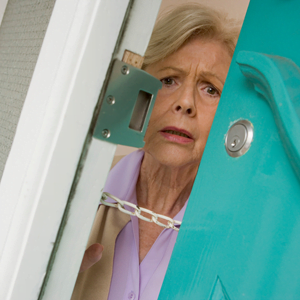
Willie opened the main door but kept the chain on. Then she went to the kitchen to call an ambulance.

But the 28 year old was not what he seemed. read more…

West Midlands Burglary Gang Target Pensioners

West Midlands Burglary Gang Target Pensioners

Just because you’re old doesn’t mean you’re safe from burglars! Sadly, the days where a pensioner could leave their door open for neighbours to check they are OK is long gone.

Over a 9 day period in October, 29 men and women aged between 70 and 89 were the victims of a spate of violent thefts in the West Midlands.

The intruders rang the door bell. They wore high visibility vests and looked official. When the door was opened, they told residents they were the Police or from a utility company. read more…

Virtual Trip Wires For Home Security

Virtual Trip Wires For Home Security

I remember the first time I saw an article about ‘trip wires’. The image showed rays of light protecting an open patio door onto the balcony at a very expensive property.

It allowed the owners to sleep in their bedroom with the door open on hot sultry nights – without fear.

The only person they had to worry about was an intrepid ‘Mission Impossible’-style cat burglar.

Someone who had managed to get around the automated gate, run the gauntlet of the watching CCTV cameras and 24/7 monitoring and avoided setting off the alarmed windows and doors. read more…

Maslow’s Hierarchy For Home Security & Burglars

Maslow’s Hierarchy For Home Security & Burglars

In 1943, a psychologist by the name of Abraham Maslow established a hierarchy of human needs. But “what’s that got to do with Home Security?”, I hear you ask!

Well, personal security is included in Safety. Which comes second in terms of importance after our most basic Physiological needs – air, water, food, shelter, sleep, clothing and reproduction.

Sadly, the safety of our family and possessions is being threatened more and more. read more…